

Detecting the Counterfeit: Lies, Flimflam and the Real Deal

Dear Friends,
Welcome to September’s Substack.
I hope you’ll enjoy this month’s blog Detecting the Counterfeit: Lies, Flimflam and the Real Deal. The audio version is available by clicking the link in the blog or clicking the link here for all podcasts. https://joanneleedomackerman.substack.com/podcast
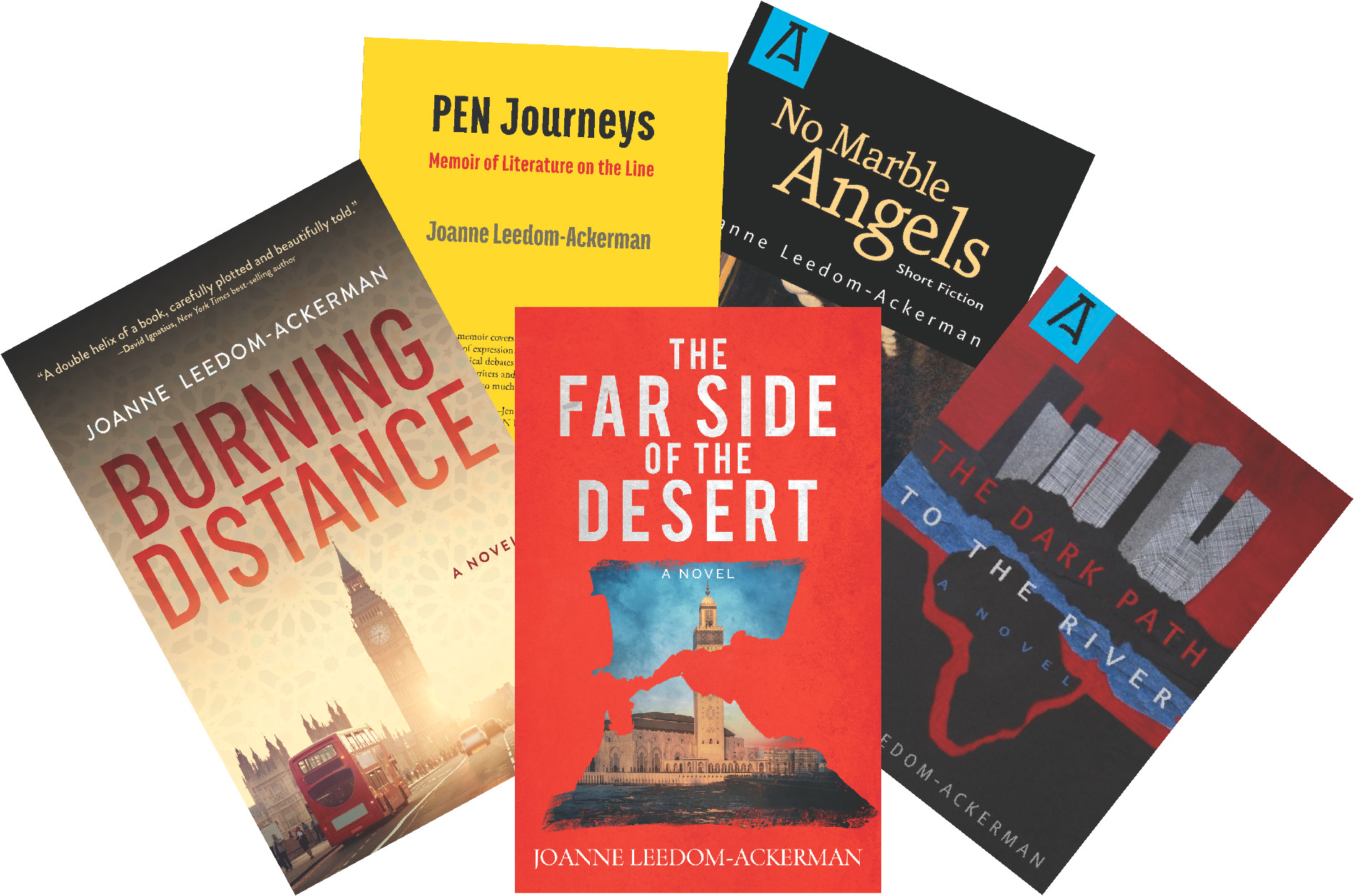
Book News shares appearances, awards, interviews, and information on my novels, including the paperback publication of The Far Side of the Desert.
The Writers at Risk section focuses on Cuban journalist and author José Gabriel Barrenechea Chávez who faces years in Cuban prison for peaceful protest.
The Books to Check Out section looks at a new memoir A Woman of Firsts: Margaret Heckler Political Trailblazer by Kimberly Heckler and a classic I reread this summer, one of the great novels in English literature—Middlemarch by George Eliot (Mary Ann Evans) about quietly trailblazing in society 150 years ago.
In the Scene section you’ll find photos, along with text from Burning Distance, and in Words of the Month a couple of words you may not use but might like to know, this month from the novel Middlemarch.
Thank you to everyone who has come to bookstores, libraries, book clubs and online for my latest novels Burning Distance and The Far Side of the Desert. Word of mouth is what sells books, connecting them to readers. Thank you for spreading the word!
If you’re interested in having me speak at a venue or with a book club, click here. Thank you too for reading and sharing this free monthly Substack On the Yellow Brick Road. I hope you’ll stay in touch!


Detecting the Counterfeit: Lies, Flimflam and the Real Deal
The swirl of political events spin in the headlines relating to wars and conflict, profound misdeeds, voting manipulations, deceit among leaders, all having profound consequences in my country and others.
I found myself typing words to focus my thoughts—lies, truth, love, counterfeit…Counterfeit, a word and idea to explore. “Counterfeit—An imitation intended to be passed off fraudulently or deceptively as genuine.”
How does one tell the truth from a lie, the real from the counterfeit in history, politics, and life? Is the answer only subjective, determined by what one wants to see and believe, an illusion propped up by those who agree with us or alternatively those who claim power over us? Such is the path of authoritarian regimes who rewrite history and events as they want them to be seen and recorded, who remove books, and therefore ideas, from the shelves, and eventually close down or limit free expression.
The best way to detect a counterfeit is to know the genuine article and have it at hand to compare. For example with currency, the U.S. Treasury goes to great lengths to make counterfeiting extremely difficult because of the intricacies in design and production. The texture and composition of the cotton and linen paper is unique with tiny red and blue micro-fibers embedded and with slightly raised printing and with color-shifting ink on larger bills when tilted towards the light, with numerals in the lower right that change color from copper to green, and a 3-D security ribbon on the $100 bills woven into the paper causing images of bells to move up and down or side to side within the ribbon.
Holding a bill to the light reveals some of these hidden features. Some bills have watermarks to the right of the portrait visible on both sides when held to light. Also, micro printed words such as USA are on certain bills, and all have exact detailed printing especially on the borders and seal.
The list continues of what is necessary for a bill to in fact be genuine U.S. currency. However, not everyone is vigilant when accepting currency, and these lapses of attention are what the fraudster is counting on when passing counterfeit money.
The safeguards in a democracy are equally fine-tuned and time-tested. These include rule of law, due process, independent judiciary, equal justice, free and fair elections, robust checks and balances on executive power, freedom of expression and the press, counters to disinformation and promotion of civic engagement. But if these safeguards are set aside or ignored, the real democracy will fade, and a counterfeit will emerge. In numbers of counterfeit democracies like Russia and Venezuela, elections are held but manipulated; opposition candidates are discouraged or even killed; the press is constrained, journalists detained or also killed, and the law is subject to the opinion of the ruler: “If I say it's law, it is law.”
Freedom House, the U.S.-based non-governmental organization notes in its Principles for Safeguarding U.S. Democracy “…The United States, as the world’s most influential democracy, has an essential part to play in the global struggle for liberty. It has a unique capacity and a moral obligation to cultivate alliances with free nations and lend support to democracy advocates in authoritarian or transitional settings. Doing so ultimately protects the freedom, security, and prosperity of Americans by promoting a stable international order, preventing armed conflicts and failed states, and ensuring the support of like-minded global powers. The United States cannot play this role if the country’s own democratic institutions continue to erode, as it will not have the internal capacity or the international credibility.”
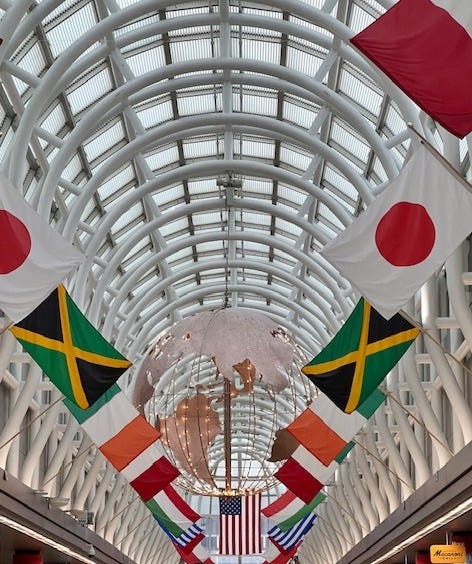
If citizens cease paying attention, if voices are silenced, if certain voters are hindered from voting, if rule of law is set aside and ignored, if courts fail to uphold laws and immunity gives unchecked power to the executive, then the counterfeit of democracy slips into place. The challenge for a counterfeit democracy is that it doesn’t have the true power of its citizens engaged. If counterfeit currency floods a country’s system, the value of the real currency becomes worthless, and runaway inflation results. A democracy which has lost its freedoms has lost its power.
“The truth will set you free,” the Bible assures, because real power derives only from what is true.

I’m honored that The Far Side of the Desert (Oceanview Publishing) was recently named as a finalist in the Suspense category for the 2025 National Indie Excellence Awards. The novel was also awarded the 2025 Bronze medal in the Suspense/Thriller category by the Independent Publishers Association (IPPY) Book Awards.
Published in 2024, The Far Side of the Desert was released in paperback April, 2025. I hope you’ll order, read and enjoy. If you’ve already read the hardcover, I hope you’ll buy the paperback and give to friends!


“The Far Side of the Desert is that rare story – a literary work and a first-rate thriller. Joanne Leedom-Ackerman, who has traveled the world advocating for human rights, is one of the few writers today who can construct a superb and complex international spy novel. The Far Side of the Desert is stellar.”
—Jennifer Clement, former President of PEN International and award-winning novelist of Prayers for the Stolen, Gun Love, The Promised Party and The Widow Basquiat.
Upcoming Events:
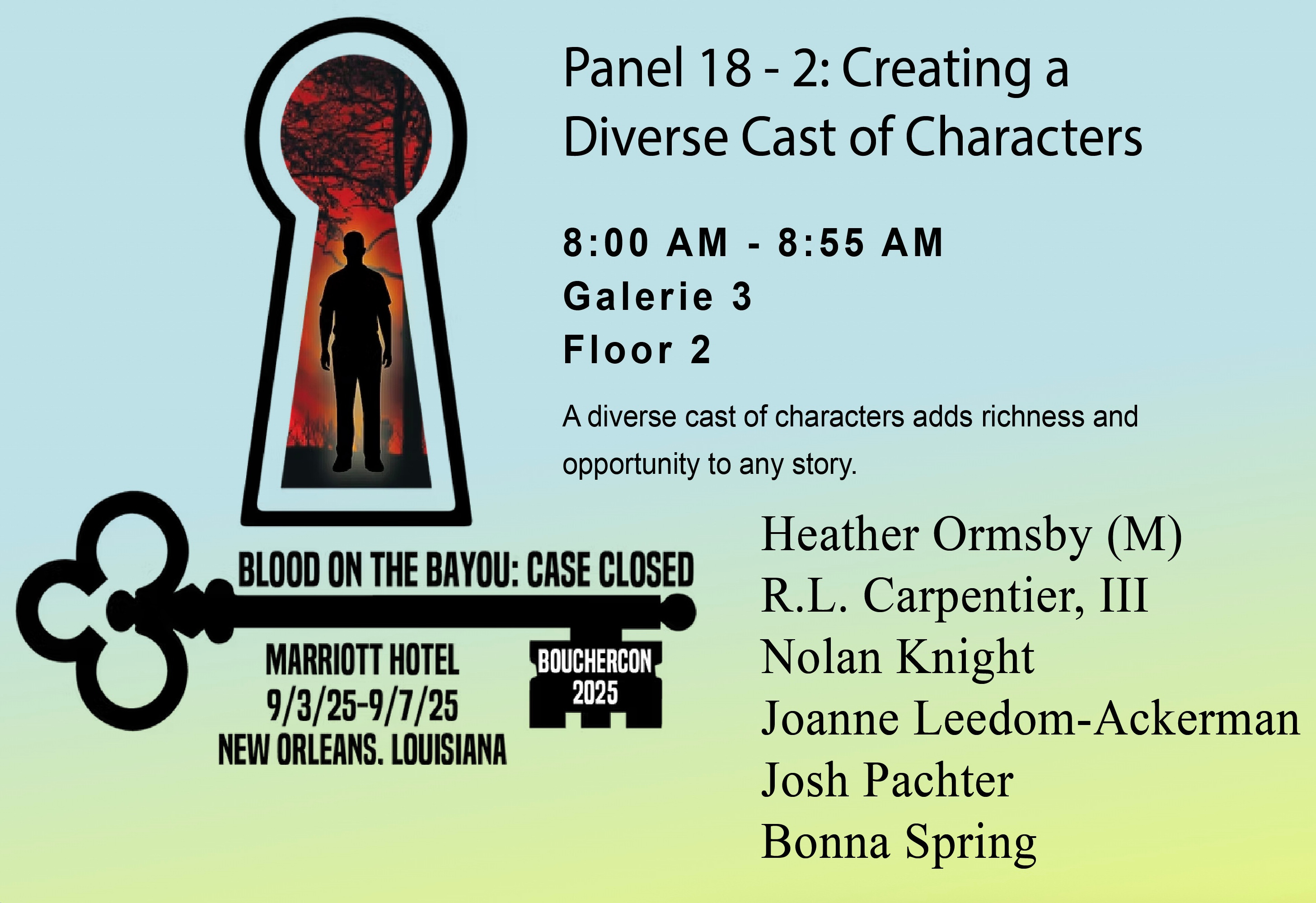
Sunday, September 7, 2025, 8:00am-8:50am
Panel Discussion: "Creating a Diverse Cast of Characters"
Gallery 3, 2nd Floor
Marriott Hotel
555 Canal Street
New Orleans, LA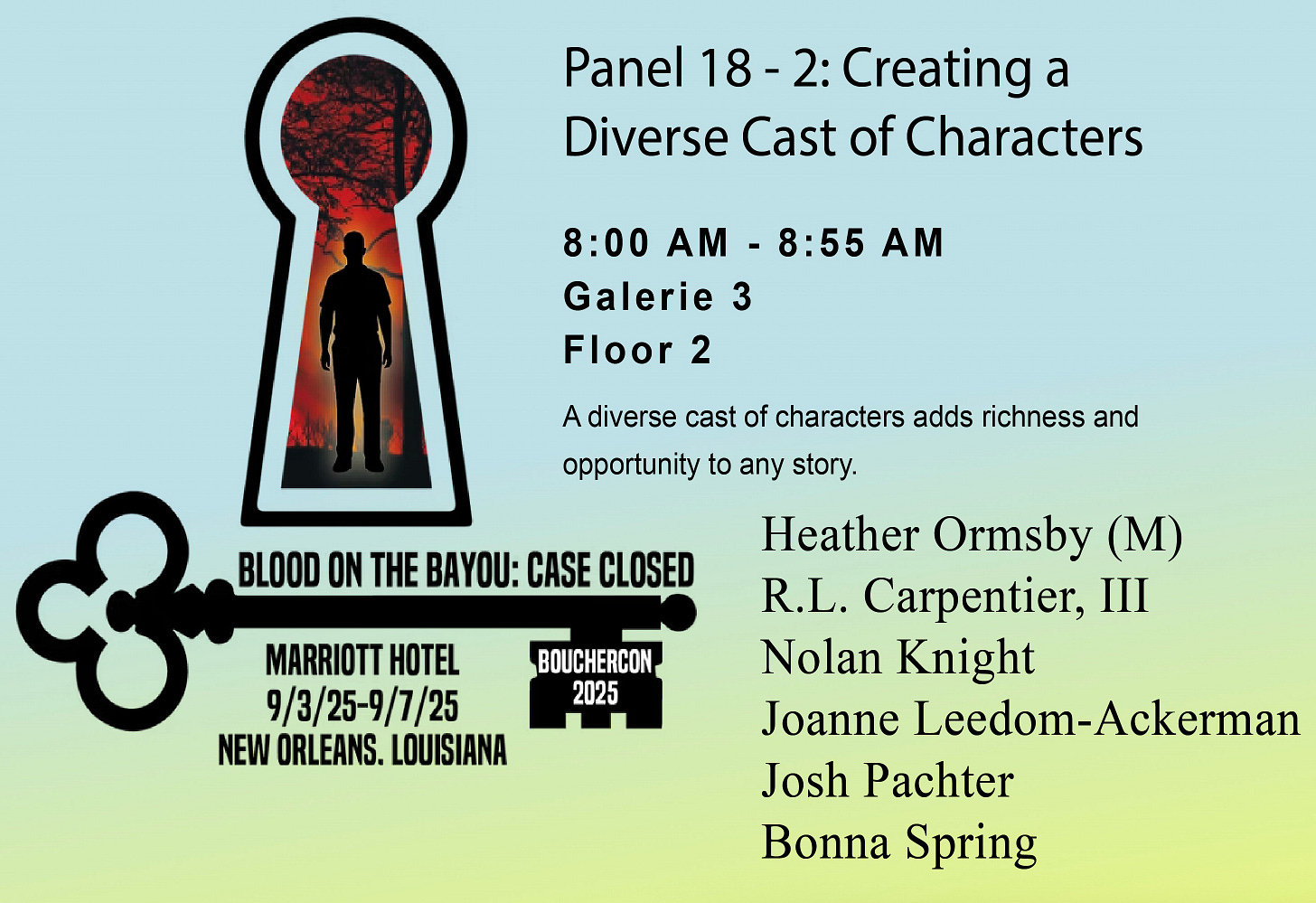
Burning Distance (Oceanview Publishing, 2023 and paperback in 2024) was honored by the 2024 American Book Fest International Book Awards as a Finalist in the Best Mystery/Suspense and Thriller/Adventure categories.

“I entered the world of Burning Distance, and I didn’t want to leave. The narrative voice unfolds the story both poetically and realistically. The narrative opens for the reader some of the history that has taken us to the current events in the Middle East and Europe and America. But first and foremost the reader will want to read Burning Distance to know the characters.”
—Azar Nafisi, best-selling author of Reading Lolita in Tehran and Read Dangerously
Thanks to Monica Hadley and Writers Voices for the recent interview about The Far Side of the Desert. You can listen here.

Selected recordings of past events and interviews:
Interview with Monica Hadley, Writers Voices
Strategies for Living Podcast: Finding Resilience Through Story
Interview with Janeane Bernstein on NPR’s KUCI, Get the Funk Out!
Book Launch for Akram Aylisli's People and Trees with Plamen Press
Why Baldwin Matters Series, The Alan Cheuse International Writers Center
Malaprop’s Bookstore and Café in Asheville, NC
Kinokuniya Bookstore in New York City with Salil Tripathi
Baum on Books on WSHU Public Radio
Interview with Anna Roins of Authorlink
Interview with Deborah Kalb
For more podcasts, videos and interviews, click here

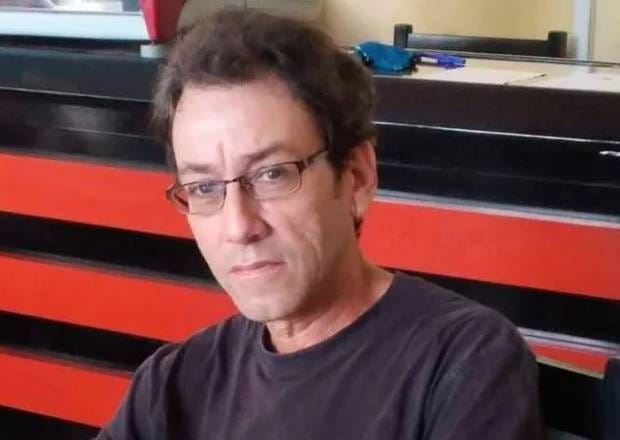
José Gabriel Barrenechea Chávez (Cuba)
(Sources include PEN International, Latinoamérica 21, CubaNet and Translating Cuba)
“Unlike the young man, for the fifty-year-old there is not a second to waste. To delay a moment longer the realization of his ideals and dreams of youth, to let slip those last opportunities that still pass within reach of his legs and hands, is simply intolerable for the man who has turned the half-century mark yesterday and is fully aware of what it means to have reached that critical age. Beyond, at a short distance from that youthful luxury, laziness, carelessness in the face of the passing of time, old age, and the slow or rapid fading of what we are, stalks us inexorably.”
So writes José Gabriel Barrenechea Chávez, Cuban independent journalist and author who has been detained since November 2024 after he participated in peaceful protests in his hometown of Encrucijada over Cuba’s energy crisis. After more than 24 hours without electricity after Hurricane Rafael, residents went to the streets as part of larger nationwide protests.
Arrested for allegedly leading one of at least 14 demonstrations around the country protesting the nationwide blackout, Barrenechea was charged with ‘public disorder.’ He faces three to eight years in prison. He is said to have been denied independent counsel and has been isolated from his family who have had limited visits. His mother was denied the right to see him and has since passed away. On a limited hunger strike his health has deteriorated.
“After spending months in prison, and having only a long time left in prison as a hope, just for participating in a peaceful and apolitical demonstration, no one can ask me to feel anything positive for a political system, institutions, and a leadership that are ultimately responsible for this hell my life has been reduced to,” Barrenechea told the independent newspaper CubaNet in an interview from prison. “It’s clear to me that a political system that is incapable of tolerating peaceful dissent and demands from the streets, when established channels have not worked, is neither fair nor represents a broad social consensus, and in reality, it is not strong either.
“My personal participation in that peaceful, apolitical protest consisted of being there, without banging on any pots and pans, and trying to maintain that peaceful, apolitical character.
“I am not in favor of violent ’regime change.’ As my statements and publications demonstrate, I have always invested everything in an evolution of the current political system and in a rapprochement between Cuba and the United States.”
To Take Action for José Gabriel Barrenechea Chávez:
Urge the Cuban government to:
Immediately and unconditionally release José Gabriel Barrenechea Chávez
Guarantee José Gabriel Barrenechea Chávez’s safety and access to adequate and independent care.
Allow him unhindered access to her family members and lawyer of his choosing.
Send Appeals to:
President Sr. Miguel Díaz-Canel:
Email: despacho@presidencia.gob.cu
Twitter: @DiazCanelB
Minister of Justice Oscar Silvera Martínez:
Email: apoblacion@minjus.gob.cu
Twitter: @OscarCubaMinjus
Facebook: @MinisterioJusticiaCuba
Minister of Culture Alpidio Alonso-Grau:
Twitter: @AlpidioAlonsoG
Facebook: @MinisterioCulturaCuba
Minister of Foreign Affairs (Minrex) Bruno Rodríguez Parrilla:
Email: dm-sec@minrex.gob.cu
Twitter: @BrunoRguezP
Facebook: @CubaMINREX
Please send emails to the Embassy of the Republic of Cuba in your own country.

An attack on a writer, the shutting down of a publishing house, the torching of a newspaper reduce the space in the world where ideas can flow. Freedom of expression is vital to writers and to readers but is challenged daily around the world. Listed here are organizations whose work on human rights and in particular issues of freedom of expression I’ve been engaged with directly and indirectly over the years. Some of the organizations have broader agendas, but all have contributed to keeping space open for the individual voice.
PEN International (with its 147 centers in over 100 countries)
PEN American Center
English PEN
PEN/Faulkner Foundation
Human Rights Watch
Amnesty International
Amnesty International USA
International Freedom of Expression Exchange (IFEX)
Committee to Protect Journalists (CPJ)
Article 19
Index on Censorship
Poets and Writers
Authors Guild
International Center for Journalists

In August I read the two books featured in this column, one just published, the other published over 150 years ago, one a biography, the other a classic English novel. I feature both here not because I read them sequentially—though that alerted me to possibilities—but because both engaged my imagination with forthright women and showed the contours of the society in which they lived.
First is the newly published biography A Woman of Firsts: Margaret Heckler, Political Trailblazer, written by her daughter-in-law Kimberly Heckler who lives nearby. The book narrates the story of a remarkable woman of Irish immigrants who was given away at birth. Through her intellect, good humor and political savvy, she managed to finish college, law school and rise to serve seven terms in the early tranche of women in the United States House of Representatives when only 2% of the representatives were women. A Republican in the predominantly Democratic state of Massachusetts, she campaigned for women’s rights, including the Equal Rights Amendment. When she eventually lost her seat in Congress, she moved on to be only the second woman to head the U.S. Department of Health and Human Services which at the time had the third largest budget in the world, second only to the national budgets of the United States and the Soviet Union. Finally, she served as Ambassador to Ireland, the first woman ambassador to serve there and to serve in all three of these positions of government. She is a woman to know.
The second book here is the English classic novel Middlemarch by George Elliot which I read decades ago but barely remembered. When it showed up on a list as one of the best novels of all times, I decided to reenter the English country world of Middlemarch and its denizens. At 838 pages in tiny print in the Penguin classic edition, Middlemarch, I am grateful to note, can now also be enjoyed as an audiobook. I read, then listened, listened then read, enjoying this 19th-century world of intertwined families and their affairs of the heart and politics. The intrepid heroine Dorthea Brooke, who paid little attention to the conventions and expectations of her day in order to find love and also to be of service, resonated for me. I can imagine her as an emotional cousin of Margaret Heckler. The author George Elliot was in fact a woman—Mary Ann Evans, who surmised at the time that she needed to take a man’s name in order to be published and read.

Written by her daughter-in-law with significant input from Heckler’s own daughter and son, A Woman of Firsts: Margaret Heckler, Political Trailblazer may be the first, but surely not the last, narrative about the Honorable Margaret O’Shaughnessy Heckler. Born of Irish immigrants who gave her away at birth and paid a stranger to raise her, Margaret Heckler’s life is a testament to the often-quoted trope: “Only in America…”
A Woman of Firsts narrates the early life of Heckler as an abandoned child, aspiring student, eventual lawyer, tracking the people who helped her along the way. Her commitment to public service expanded as she broke down barriers and championed the causes of others. As a legislator, a cabinet secretary and an ambassador, she took on causes often because of the empathy she felt for those in her own life experience and from her conviction that government could make the lives better for others, especially those left behind.
As one of her staff noted, “Margaret was a top-down visionary. She was operating at thirty thousand feet, and she needed us to bring it in for a landing. ‘Here are my ideas,’ she would say to her staff, now you assemble the ingredients and bake the cake. She knew what the problem was, she knew what the solution was, but she wanted us to work on the stuff in the middle. This skill set resulted in some of Margaret’s greatest achievements as secretary of HHS: greater focus on minority health, increased HIV/AIDS research, creation of a federally funded hospice program, and more attention given to women’s health, child services, Alzheimer’s disease, breast cancer research, and much more.”
She also pioneered work to assure that medical services were equally available for minority patients and doctors. As a legislator she focused on women and equal rights, pioneering the Women’s Caucus in Congress to assure a more powerful voice on issues affecting women; she championed legislation that for the first time allowed women to get credit on their own. This was only achieved in 1974. She also pioneered work for Veterans; her father was a veteran. She worked on a bipartisan basis whenever she could.
Her work and energy are impressive whether one agreed with her politics or not. Mother of three children, her personal journey was not always easy, and the personal details and tensions are only lightly touched on in this book. In the beginning of her career, her husband was one of her earliest advocates and was her campaign manager, but eventually the marriage dissolved.
In the future there may be more books…and/or a movie. But for now, readers will be grateful for her devoted family who have brought her story to the public in clear prose and a chronological narrative with pictures!
From A Woman of Firsts:
Margaret O’Shaughnessy Heckler was one of the most powerful and influential women in the United States throughout much of the 1970’s and 1980’s. A trailblazing political leader, she was one of only eleven congresswomen when first elected in 1966, then later was appointed by President Ronald Reagan as secretary of health and human services and finally, served as the first woman US ambassador to Ireland, as such, becoming the first woman to earn a “triple crown” in politics.
……
Since the start of their relationship, Jack had been clear that he did not want children. Dreading Jack’s reaction, Bridget hid her pregnancy. But one night when she was twelve weeks along, Jack came crashing through the apartment earlier than usual and found Bridge in tears. In her emotional state, she admitted to her husband that she was pregnant. Disappointed and enraged, Jack shouted, “There will be no child in our home!”…
…When Bridget was discharged from the hospital, Jack hailed a taxi. Carrying their newborn baby, he and Bridget made their way to Mrs. West’s house at 2536 Curtis Street. Bridget returned to her job as a private maid and Jack carried on working as a doorman.
Three-day-old Margaret would never again fully belong to her parents. Margaret’s journey begins at the crossroads of her father’s rejection, her mother’s powerlessness, and the extraordinary compassion of an elderly stranger.

Middlemarch: A Study of Provincial Life bows under its quotidian title, a massive volume of Victorian sentences unfolding the complexities of human hearts, marital struggles, community and political tensions, laced with corruption and also generosity. Middlemarch stands the test of time because of its characters and the astute psychological portraits George Elliot/Mary Ann Evans layers onto every page like an artist who understands that each small brush stroke and nuance of color will eventually result in a masterpiece, recreating life in the reader’s imagination.
The interweaving of the Brooke sisters and family, the Vincy family, the Bulstrodes, the Cadwalladers, Casaubons, the Chettams [no one advised Elliot not to give so many characters names starting with the same letter—“C”], the Farebrothers, the Featherstones [same problem with “F”], the Garths, Lydgate and Ladislaw [same complaint about the “L” characters], then Raffles and Wrench and others. The cast is large with no Cast of Characters to consult. The names at times overlap and are confusing as they are in life. In the end the marital and family relationships and cousins and wives and children are all trying to find their place and their hearts in this fictitous Middle English village and region.
The characters are linked to each other in an intricate weave of familial and geographic connections, aspirations and pretensions. By the end, Elliot unwinds this tangle like a master pulling out thread by thread in the knot of life until all the threads lie flat and can be woven into a colorful and moving tapestry.
My main focus was Dorothea Brooke, who opens the book and is aspiring towards knowledge for her intellect and soul. She is young and not bothered by accumulating worldly goods though in the process of accepting the proposal of an older man whom she thinks can impart to her wisdom, she ends up inheriting wealth, but with a codicil that would prevent her from the happiness she seeks. Dorothea’s is one of the many dramas in Middlemarch, one which ends the novel with wisdom:
Her finely touched spirit had still its fine issues, though they were not widely visible. Her full nature, like that river of which Cyrus broke the strength, spent itself in channels which had no great name on the earth. But the effect of her being on those around her was incalculably diffusive: for the growing good of the world is partly dependent on unhistoric acts; and that things are not so ill with you and me as they might have been, is half owing to the number who lived faithfully a hidden life, and rest in unvisited tombs.
From Middlemarch:
Women were expected to have weak opinions; but the great safeguard of society and of domestic life was, that opinions were not acted on. Sane people did what their neighbors did, so that if any lunatics were at large, one might know and avoid them.
The rural opinion about the new young ladies, even among the cottagers, was generally in favor of Celia, as being so amiable and innocent-looking, while Miss Brooke’s large eyes seemed, like her religion, too unusual and striking. Poor Dorothea! Compared with her, the innocent-looking Celia was knowing and worldly-wise; so much subtler is a human mind than the outside tissues which make a sort of blazonry or clock-face for it.
Yet those who approached Dorothea, though prejudiced against her by this alarming hearsay, found that she had a charm unaccountably reconcilable with it. Most men thought her bewitching when she was on horseback. She loved the fresh air and the various aspects of the country, and when her eyes and cheeks glowed with mingled pleasure she looked very little like a devotee. Riding was an indulgence which she allowed herself in spite of conscientious qualms; she felt that she enjoyed it in a pagan sensuous way, and always looked forward to renouncing it.
She was open, ardent, and not in the least self-admiring; indeed, it was pretty to see how her imagination adorned her sister Celia with attractions altogether superior to her own, and if any gentleman appeared to come to the Grange from some other motive than that of seeing Mr. Brooke, she concluded that he must be in love with Celia: Sir James Chettam, for example, whom she constantly considered from Celia’s point of view, inwardly debating whether it would be good for Celia to accept him. That he should be regarded as a suitor to herself would have seemed to her a ridiculous irrelevance. Dorothea, with all her eagerness to know the truths of life, retained very childlike ideas about marriage. She felt sure that she would have accepted the judicious Hooker, if she had been born in time to save him from that wretched mistake he made in matrimony; or John Milton when his blindness had come on; or any of the other great men whose odd habits it would have been glorious piety to endure; but an amiable handsome baronet, who said “Exactly” to her remarks even when she expressed uncertainty—how could he affect her as a lover? The really delightful marriage must be that where your husband was a sort of father, and could teach you even Hebrew, if you wished it.

Sharing here images and passage of text from Burning Distance:
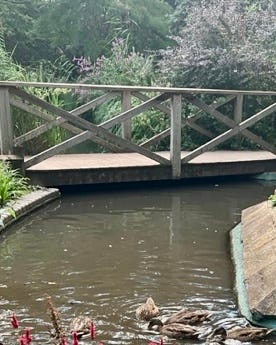
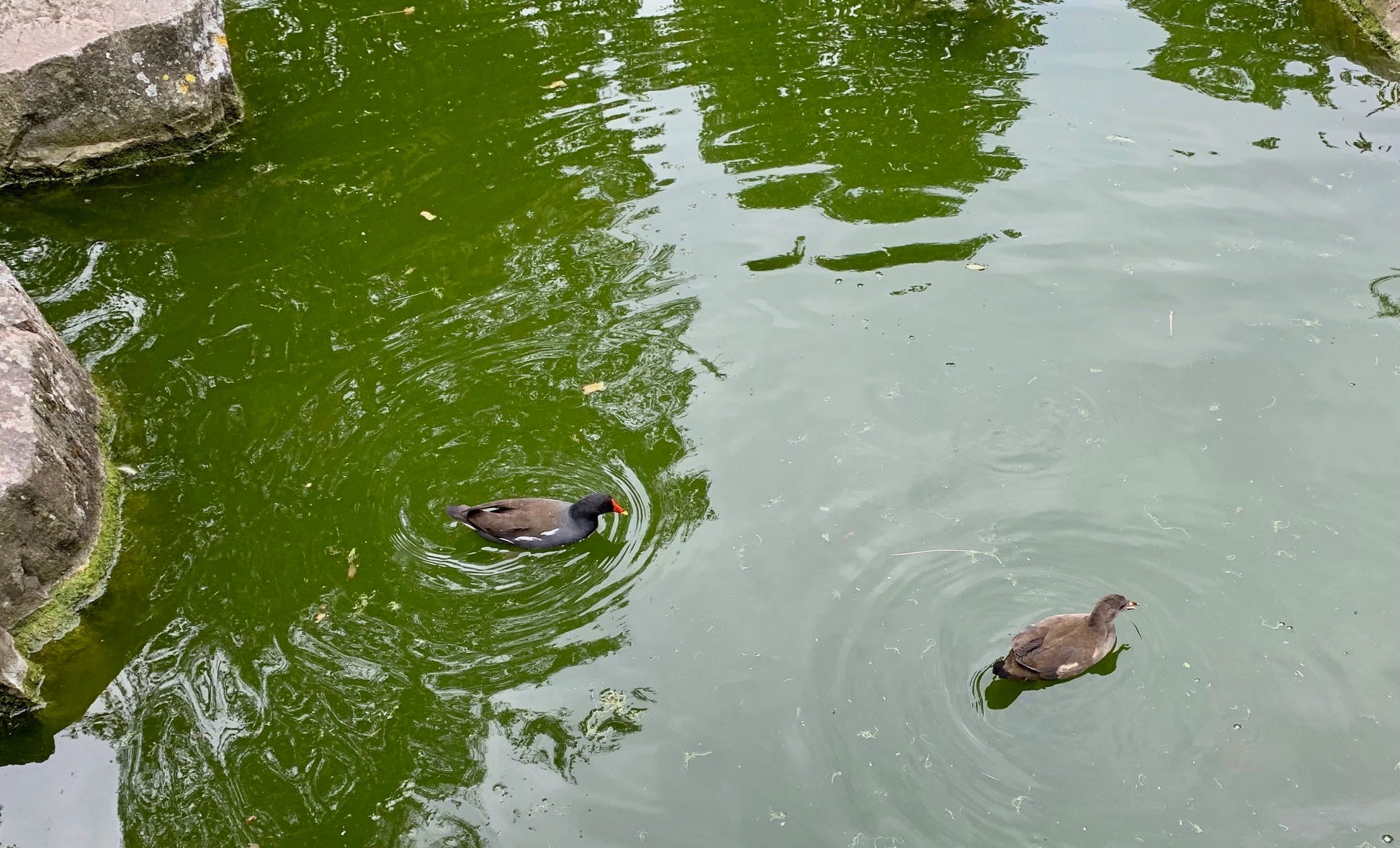
“Merry Christmas,” I answer back. I glance at Ramsay—his clean, literal jaw, his credulous eyes, his curly, uncombed hair. Sometimes he can spend an entire walk without speaking. He’s the most self-contained person I know and yet in a way the loneliest.
“So tell me about your trip.” I feel a barrier still between us from our last meeting. He takes hold of my hand in his pocket but doesn’t answer right away.
“I finished the project in Kuwait,” he says finally, “and then I had a project of my own.”
“What kind of project?”
“I was installing a monitoring system at an airport,” he answers the first question. We stop by the duck pond at the top of the park. A few hearty ducks are out swimming. “In Kuwait I located a man . . .” he glances at me then looks away…

Over the years I’ve accumulated a running list of words I haven’t known from two main sources: WordDaily and WordGenius and this month from the novel Middlemarch.
Mawworm
[maw·worm]
Part of speech: noun
a parasitic worm of the stomach or intestine
a hypocrite
Example:
“Away from her sister, Celia talked quite easily, and Sir James said to himself that the second Miss Brooke was certainly very agreeable as well as pretty, though not, as some people pretended, more clever and sensible than the elder sister. He felt that he had chosen the one who was in all respects the superior; and a man naturally likes to look forward to having the best. He would be the very Mawworm of bachelors who pretended not to expect it.”—from Middlemarch
Pilulous
[pil-yuh-luhss]
Part of speech: adjective
resembling a pill
small and insignificant
Example:
“Has anyone ever pinched into its pilulous smallness the cobweb of pre-matrimonial acquaintanceship?”
—from Middlemarch

I’ve spoken at bookstores, university classes, book luncheons and in-person and zoom book clubs and look forward to more ahead. I enjoy giving readings and addressing audiences in many venues and moderating discussions on a wide range of topics and most of all meeting readers.
Click here for a list of future and past public events.
Or fill out the speaking request form to schedule an event.
I like engaging with readers so if you are in a Reading Group or Book Club and read one of my books, I’m glad to be in touch by email, zoom, or when possible in person. I can also suggest discussion topics.
Fill out the reading group form here to schedule a meeting.
Please give us more words from your Middlemarch reading - so much fun!