Dear Friends,
Welcome to October’s Substack.
I hope you’ll enjoy this month’s essay Dinner and a Movie or Frontlines with ISIS? The audio version is available by clicking the link in the blog or clicking the link here for all podcasts. https://joanneleedomackerman.substack.com/podcast
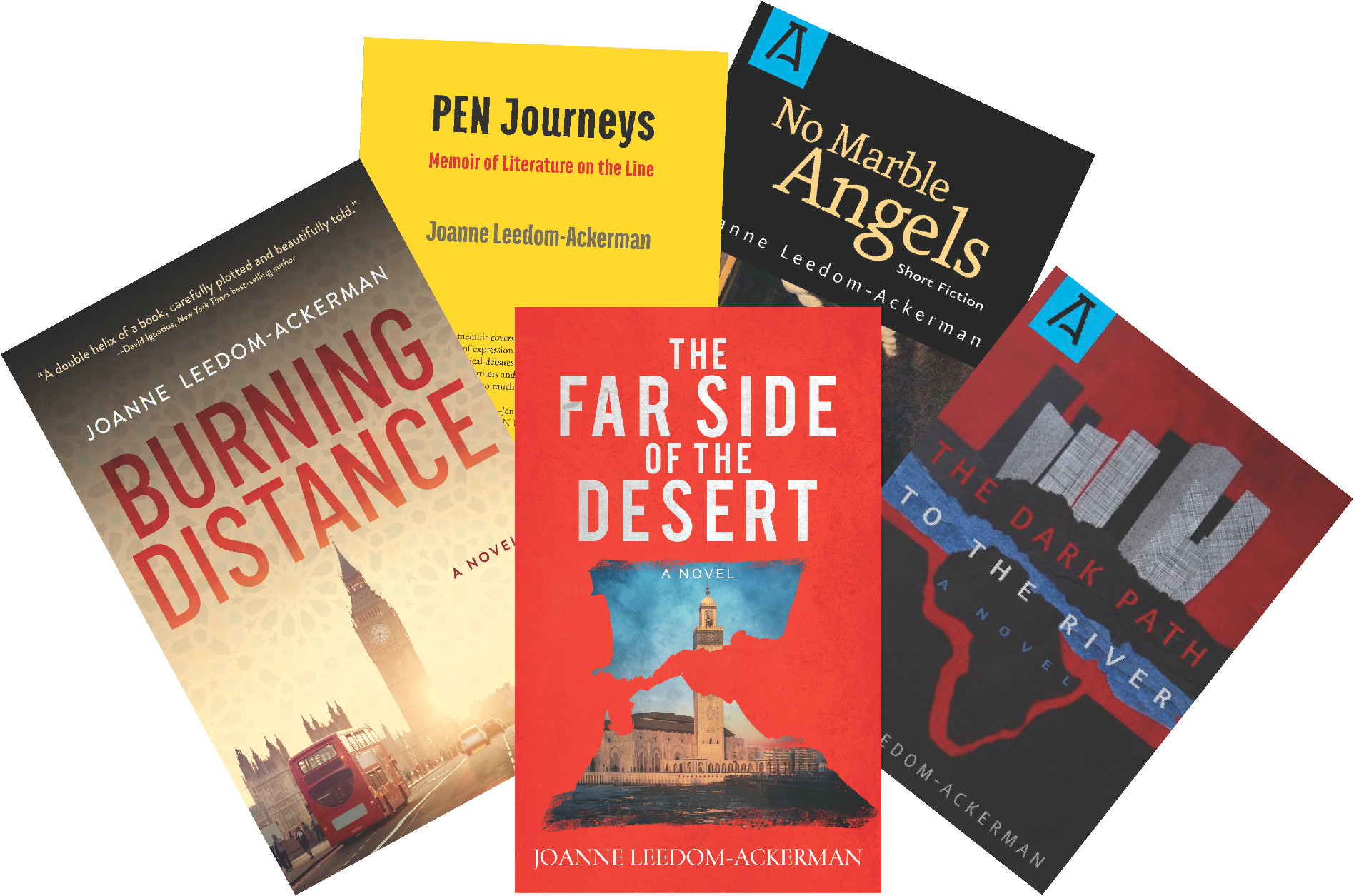
Book News shares information and interviews on my latest novels Burning Distance and The Far Side of the Desert and an excerpt of a recent short story.
The Writer at Risk section this month focuses on young Myanmar/Burmese writer and activist Wai Moe Naing who is currently facing 74 years in prison.
The Books to Check Out section profiles two international political thrillers: one just published—Beyond Honor by K.B. Brodsky and a classic The Ghost Writer by Robert Harris.
In the Scene section you’ll find a photo relating to text from my novel The Far Side of the Desert. Words of the Month share a couple of words you may not use but might like to know.
Thank you to everyone who has come to bookstores, libraries, book clubs and online for my new novels Burning Distance and The Far Side of the Desert. Also available are my novel The Dark Path to the River and short story collection No Marble Angels and nonfiction books PEN Journeys: Memoir of Literature on the Line and edited volume The Journey of Liu Xiaobo: From Dark Horse to Nobel Laureate. Word of mouth sells books so thank you for spreading the word!
If you’d like to have me speak at a venue or with a book club, click here. Thank you too for reading and sharing this free monthly Substack On the Yellow Brick Road. A couple of new features in the About section and Bio tab. I hope you’ll stay in touch!


Dinner and a Movie or Frontlines with ISIS?
This is an encore essay I wrote a while ago and recently came across. With the current stir in the U.S. over just who gets to cover what news and the value of a press free to report the news as it determines, I offer a memory (originally published on my website on November 22, 2021).
I drafted this essay March 12, 2019, but I was concerned that even this brief exchange might put my friend in danger so I checked with her before I published. She asked that I not publish it while the conflict was going on, so I filed the post away in the draft file on my website. At the time the situation on the ground in Syria was precarious. I recently rediscovered the file. My thesis still holds even while the circumstances on the ground have changed. It is now safe to publish this two and a half years later, though it is still problematic in situ.
JLA text: “If you’re in town, you want to grab dinner…and movie tonight?” 8:53am
Reply: “Hi from Syria where I’m covering final battle with ISIS…” 9:39am
I began my writing career as a journalist decades ago with fellow young women reporters figuring a way to get out and report on the world.
I eventually struck out on a different path, went back to graduate school, focused on fiction, married, raised a family, but these women stayed on course and are still reporting from the frontlines and are still some of my close friends.
Added to the above exchange that morning was an email from another friend from those days who told me she’d just won the Overseas Press Award for best commentary in any medium on international news.
All of us have circled the globe—they as reporters, me as novelist and worker with organizations on the front lines of human rights, education and conflict. I’m proud of these friends and feeling nostalgic. I often end my correspondence by the salutation: “Stay safe.”
These days many women work on the frontlines of conflict as journalists and correspondents, but this wasn’t always the norm. Means and methods of reporting have also changed. The pace of news and the speed with which it is reported has increased dramatically over the last half century even as the number of organizations supporting correspondents in foreign lands has diminished for women and men. More and more news is derivative, sourced from a few well-staffed newspapers and media outlets then riffed on, commented on, regurgitated by pundits around the globe.
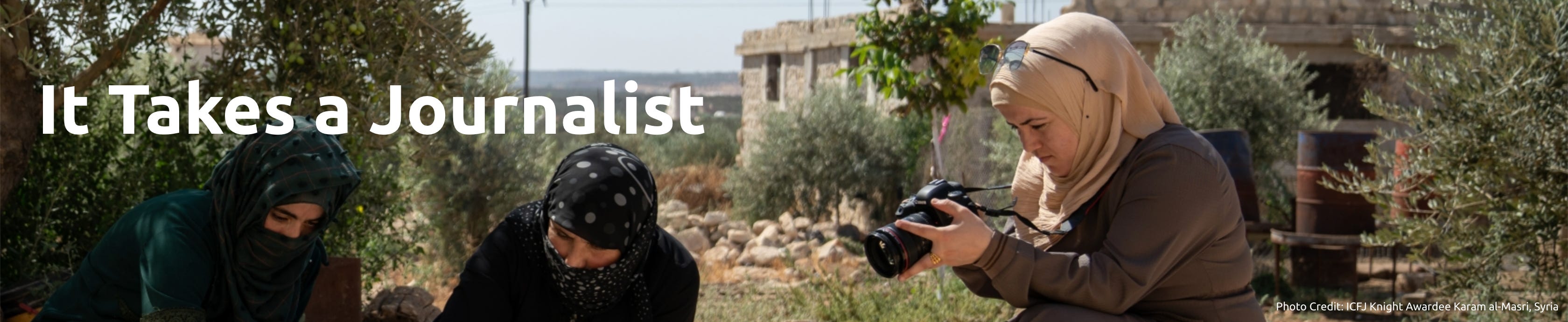
There is more talk than ever, 24-hour talk, but those inhabiting the front lines—women and men—who witness for the rest of us and send back clear, factual perspectives are a necessary, yet possibly threatened species. With the development of the internet, however, there are now networks of international reporters such as those who collaborated on the Panama and Pandora papers and the networks the International Center for Journalists—ICFJ—nurtures. ICFJ’s motto “It Takes A Journalist” rings truer than ever.
“Stay Safe,” I wrote back to my friend. “Let’s hope there’s a movie we want to see when you get home.”

Posting again this month a link to my short story “The Governor on the Zambezi” in the recent Hopkins Review. Published quarterly by Johns Hopkins University in partnership with the Hopkins Press, America’s oldest university press, the Hopkins Review literary magazine has had a transformation over the last years. It continues to publish thoughtful essays, poetry and fiction from a wide array of writers domestic and international and has had a facelift with bright engaging covers and art.

From “The Governor on the Zambezi”:
The nose of the crocodile rested on the water among the lily pads, its eyes squinting, barely open, the rest of its body submerged. Hidden among the reeds along the bank, the old crocodile could lie still for hours. This particular crocodile, called “the Guv,” was rumored to be two hundred years old, though some said three hundred, and one retired guide, who himself was rumored to be over one hundred years old, said the crocodile had been around for half a millennium. No records existed to prove these stories. The oldest confirmed age of a crocodile was closer to 125 years, but ales of the Guv spanned more generations than anyone could count. All agreed that the Guv had witnessed history from the river.
The great-great-grandfather of the senior guide on the Sunset Cruise almost lost his leg to the Guv. When skeptical tourists asked how the guides could be sure it was the same croc, they said that if you’d lived on the Zambezi River for as long as they had, you knew one croc from another. Tourists came from all over to see the Governor. That had been his name for the past hundred years, though everyone just called him “Guv.” He was said to weigh over a ton. Most visitors weren’t lucky enough to see him, for the Governor swam the Zambezi from Katima Mulilo in Namibia to Livingstone in Zambia and then to Victoria Falls in Zimbabwe. No one had seen him farther south on the Zambezi, and no one was ever sure exactly where he was.
Today, Gani, the senior guide, pointed out the Guv to the passengers on the Zambezi Sunset Cruise like a tour guide in Beverly Hills pointing at the house of a movie star. As Gani navigated the boat from an open wheelhouse, he perched one foot on the cooler of hors d’oeuvres that would be offered to the passengers as they returned to the dock…
I’m honored that The Far Side of the Desert (Oceanview Publishing) was named a finalist in the Suspense category for the 2025 National Indie Excellence Awards. The novel was also awarded the 2025 Bronze medal in the Suspense/Thriller category by the Independent Publishers Association (IPPY) Book Awards.
Published in 2024, The Far Side of the Desert was released in paperback April, 2025. I hope you’ll order, read and enjoy. If you’ve already read the hardcover, I hope you’ll buy the paperback and give to friends!


“A thoroughly enjoyable read. I hesitate to call The Far Side of the Desert a page turner, but only because it’s so much more, with characters that will stay with you long after you finish.”
—James Grippando, New York Times best-selling novelist, The Big Lie and Code 6
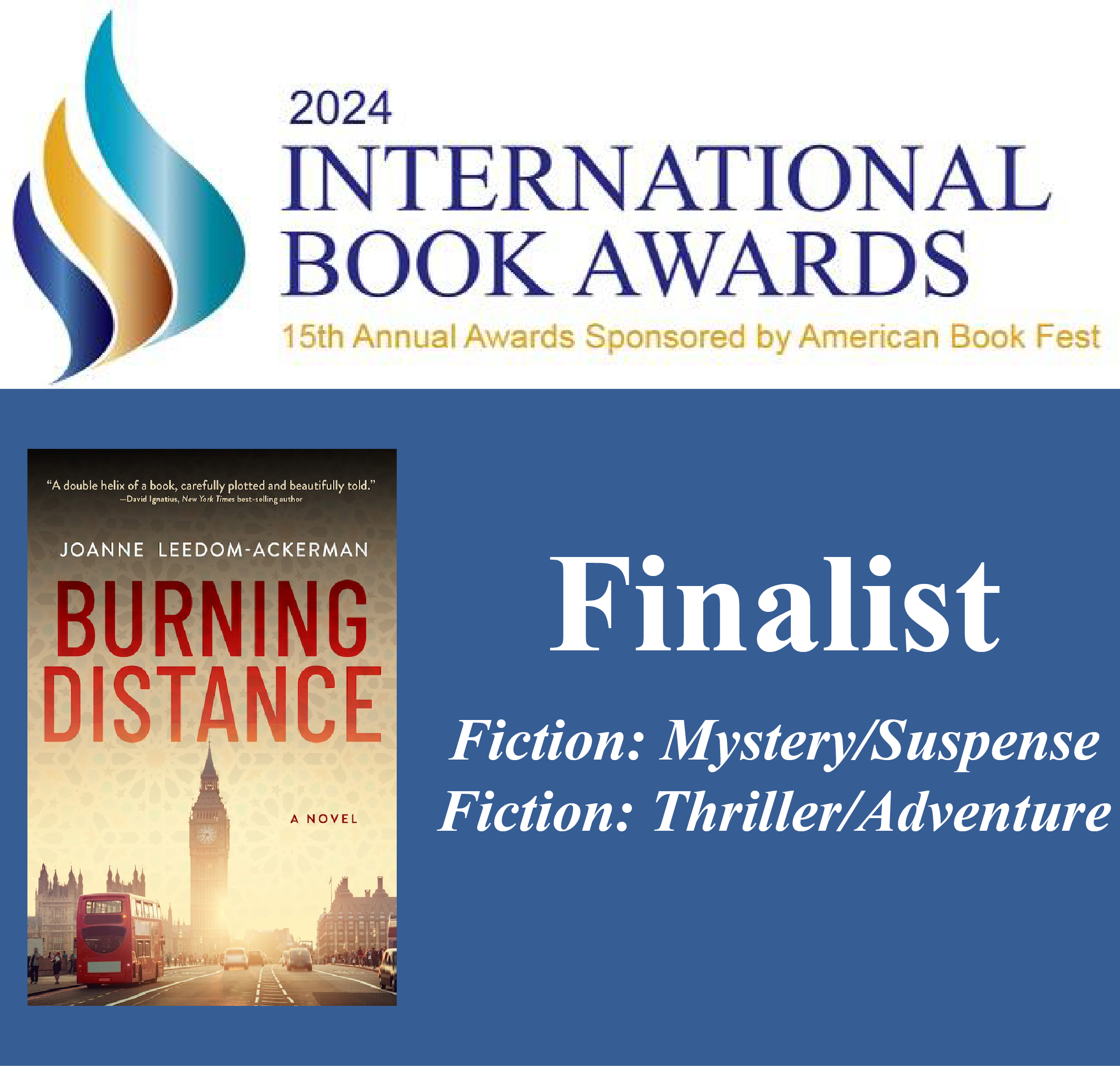
Burning Distance (Oceanview Publishing, 2023 and paperback in 2024) was honored by the 2024 American Book Fest International Book Awards as a Finalist in the Best Mystery/Suspense and Thriller/Adventure categories.
“Burning Distance is a mystery, a complicated, story-driven drama of lives lived amidst the high risk of life and death in international arms trading and grounded by the unlikely love story.”
—Susan Richards Shreve, More News Tomorrow
Thanks to Monica Hadley and Writers Voices for the recent interview about The Far Side of the Desert. You can listen here.

Selected recordings of past events and interviews:
Interview with Monica Hadley, Writers Voices
Strategies for Living Podcast: Finding Resilience Through Story
Interview with Janeane Bernstein on NPR’s KUCI, Get the Funk Out!
Book Launch for Akram Aylisli's People and Trees with Plamen Press
Why Baldwin Matters Series, The Alan Cheuse International Writers Center
Malaprop’s Bookstore and Café in Asheville, NC
Kinokuniya Bookstore in New York City with Salil Tripathi
Baum on Books on WSHU Public Radio
Interview with Anna Roins of Authorlink
Interview with Deborah Kalb
For more podcasts, videos and interviews, click here

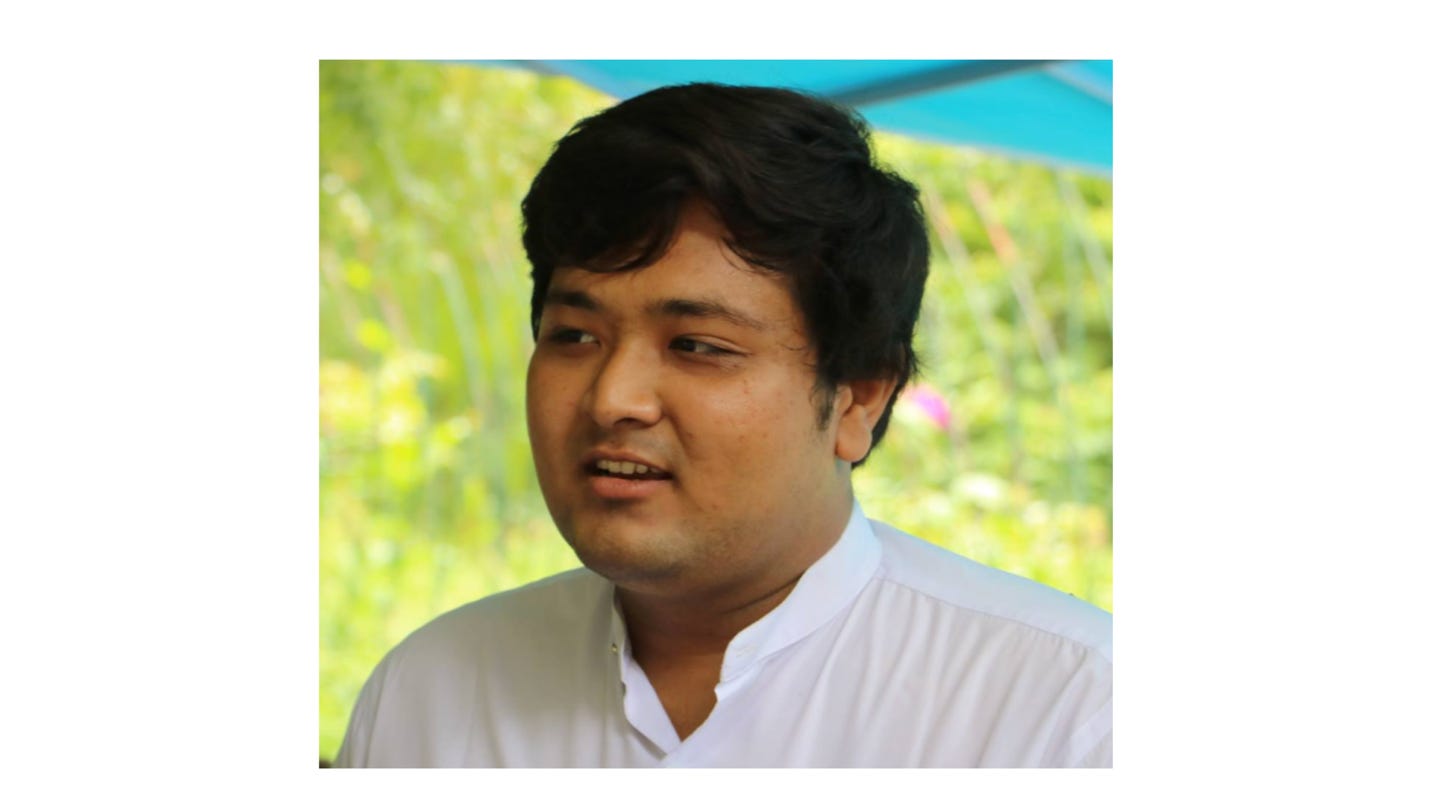
Wai Moe Naing (Myanmar/Burma)
[Sources include PEN International, Perth PEN, PEN America, Burma News International (Mizzima News), Amnesty International]
Pro-democracy activist and writer Wai Moe Naing, also known as Monywa Panda, has been sentenced to an accumulated 74 years in prison in a spiral of convictions that began in April 2021 at a protest when junta forces rammed him with a car. When he fled, armed men attacked him.
Formerly a student activist, Wai Moe Naing was a prominent leader of the anti-coup movement in Myanmar and rose to prominence organizing daily anti-coup protests in Monywa.
A member of PEN Myanmar, Wai Moe Naing began writing and publishing at a young age and has published short stories and articles in magazines and journals, both literary work and political commentary.
After the protest in 2021, Wai Moe Naing was convicted of rioting, incitement, robbery, and murder, all charges he has denied. He has been tried in military court in hearings held behind closed doors. He has had to defend himself because his lawyers were arrested in a crackdown on lawyers who defend political activists.
According to Political Prisoners Network Myanmar in June 2025 around 200 inmates, including Wai Moe Naing, were transferred to Mandalay Obo Prison where many were beaten by prison staff. Wai Moe Naing was said to have been beaten with an iron rod and sustained a serious head injury but was not taken to the prison hospital for treatment. According to his family he has repeatedly been denied medical care and has spent prolonged time in solitary confinement, placed in a punishment ward, shackled and denied visitation rights and parcel deliveries. He has been allowed only limited contact with his family.
“The arrest of prominent protest leader Wai Moe Naing in Myanmar is a blatant attempt to silence dissent,” according to Amnesty International. “The courage of peaceful protesters like Wai has inspired the world.”
To Take Action for Wai Moe Naing:
Take Action:
Send appeals to the Myanmar government:
Protesting the detention of Wai Moe Naing.
Requesting the immediate release or Wai Moe Naing.
Calling authorities to drop all charges and overturn detention orders against Wai Moe Niang.
Send your appeals to:
Dr Thida Oo
Attorney General of the Ministry of Legal Affairs
Republic of the Union of Myanmar
Building 25,
Nay Pyi Taw, Myanmar
Telephone: +95 067 404054
Fax: + 95 67 404106
Email: ago.h.o@mptmail.net.mm
Please copy appeals to the diplomatic representative for Myanmar in your country if possible. Details of some Myanmar embassies can be found here.
You can also write to:
Wai Moe Naing
C/O The governor of Obo Prison
Obo Prison
Mandalay
Myanmar (Burma)


After more than five years in prison, Dr. Hany Babu, an associate professor of language and linguistics at Delhi University, has been granted bail by the Bombay High Court. Arrested in July 2020, he was charged, along with other noted Dalit and Adivasi rights activists, for allegedly inciting caste-based violence through speeches at a rally in December 2017. He languished in prison without a hearing for bail and without a trial for five years. Bail was granted on the grounds of prolonged pre-trial detention with a warning that “justice delayed should not become justice denied.”
(Details of Dr. Hany Babu case can be found in the Writers in Risk profile October 2025 Substack)

After more than five years in prison, Amanda Echanis, Philippine poet, writer, and activist has been cleared of a charge of illegal possession of firearms and explosives. She was arrested at her home where she was caring for her one-month-old child and detained without evidence. The court has found that the prosecution failed to establish its case. Her case has raised questions of evidence planting and violations of due process. The delays kept her in prolonged pre-trial detention, taking away her right of a speedy trial and five years of her freedom.
(Details of Amanda Echanis can be found in the Writers at Risk profile in April 2025 Substack.)

An attack on a writer, the shutting down of a publishing house, the torching of a newspaper reduce the space in the world where ideas can flow. Freedom of expression is vital to writers and to readers but is challenged daily around the world. Listed here are organizations whose work on human rights and in particular issues of freedom of expression I’ve been engaged with directly and indirectly over the years. Some of the organizations have broader agendas, but all have contributed to keeping space open for the individual voice.
PEN International (with its 147 centers in over 100 countries)
PEN American Center
English PEN
PEN/Faulkner Foundation
Human Rights Watch
Amnesty International
Amnesty International USA
International Freedom of Expression Exchange (IFEX)
Committee to Protect Journalists (CPJ)
Article 19
Index on Censorship
Poets and Writers
Authors Guild
International Center for Journalists

This month’s Books to Check Out section spotlights a new and first international political thriller Beyond Honor by K.B. Brodsky (the moniker for a husband and wife writing team) and The Ghost Writer, a 20-year-old novel by celebrated British author Robert Harris. Both novels unfold narratives in the shadow of political events and crises which echo familiar themes, administrations and leaders but with fictional characters lurking behind the scenes and spinning tales of what could have happened in the shadow of the real headlines.
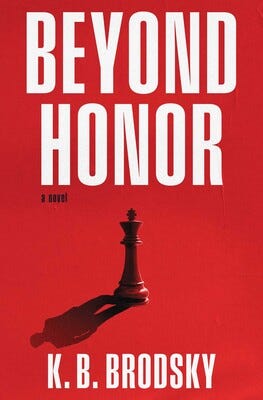
Beyond Honor narrates a complex tale of loyalty, love, and revenge with characters in conflict over where the roots of honor lie.
A U.S. President is corrupted by Russian agents through his best friend—a real estate developer—entangled with a Russian-controlled bank and a SVR girlfriend.
The President is responsible for the death of a U.S. covert team that has slipped into the Ukraine to protect those sent to restore a hacked missile defense system. The entire paramilitary team is ambushed and killed because of the President’s indiscretion in discussing the mission with his friend.
The heroic team leader Kevin Rhoads was not on the mission because of pressing family issues and is devastated and looks for how to honor his colleagues and redeem his own survivor’s guilt.
A CIA director, formerly captured and imprisoned by the Russians, secretly approves the extraction of a clandestine CIA agent held in the wastelands of Siberia and also uses this mission for a covert purpose that challenges the chain of command.. She enlists Kevin Rhoads to execute the exfiltration and involves Kevin’s growing love interest Whitney, a .CIA analyst who accompanied him on an earlier mission.
As the plot thickens so do the characters’ relations and revelations so that the reader is not only turning pages to find out what happens next but to follow the deepening relationships and to learn detailed descriptions of how these operations take place.
As with any good political thriller, the complex strands all weave together and by the end are tied up enough for an epilogue, but also enough are left dangling for a sequel.
From Beyond Honor: (From Chapter 1, but be sure to read the Prologue!)
LANGLEY, VA
“Clear the room.” Alan Rexin burst into the operations center at CIA headquarters, the pneumatic door hissing shut behind him. The glow of two dozen monitors cast a pale blue light across his face. Eight technicians stood and began to exit. Rexin held up his hand. “Except,” he said, eyes finding the staff operations officer, “who handles Python?”
“I do, sir.” Rexin located the voice—a woman in her forties with silver-streaked hair pulled back in a tight bun, her desk crowded with half-empty coffee cups. She sat at a workstation in the lower part of the room, hand half-raised like a cautious student.
“You stay. Everyone else grab a coffee,” he ordered. The technicians climbed the short flight of stairs to the exit. Two people hurried into the room as the door closed behind them. The only sounds were the steady hum of servers and the soft clicking of the remaining technician’s keyboard.
Rexin, the deputy director for operations, stood at the head of a sterile conference table in the center of the mezzanine. He removed his jacket, hung it over the back of his chair, loosened his tie, and rolled up sleeves. He raised his eyebrows at the newcomers and turned to the staff operations officer. “You too.” The officer, looking deflated, cast a questioning glance at his remaining technician in charge of the missing operative, Python, and left the room.
“Tom,” Rexin said, shaking the hand of Tom Hudgins, the deputy director of the Russian desk.
“Director Rexin,” Hudgins said. “This is Leslie Block, assistant director of Technical Services.” Rexin nodded at the woman and motioned them impatiently to the table, elevated above the three rows of computer stations, commanding a view of the video wall across the room.
“Is he dead?” Rexin asked.
“We are not sure, sir,” Hudgins replied. His wrinkled shirt and the deep circles under his eyes indicated that he had been asking the same question since Python missed his second check-in one day ago.
“Did he defect?” Rexin continued. He had seen everything in his twenty-five years of service.
“No. No fucking way! I recruited the kid. Daniel Komoroff is a true believer.”
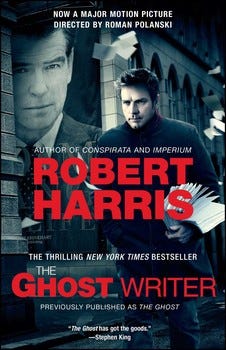
The Ghost Writer by Robert Harris, the prolific British historical novelist and international thriller writer, was published in the U.S. in 2007 and made into a movie in 2010 starring Pierce Brosnan and Ewan McGregor, neither of which I read nor saw at the time so I approach the book with a longer historical view though one still vibrating with the consequence of that time and the war in Iraq.
The novel narrates the story through the voice of the ghost writer who is never named and who has been brought in to finish and turn around a quick memoir/biography of former British Prime Minister Adam Lang after the original writer is found dead. The role of the ghost writer is to adapt the tone and voice of the subject and tell the story in a more polished and professional way but not exercise the investigative functions of a journalist.
However, a highly controversial event from the Gulf War breaks into the headlines assuring heightened interest in the memoir at the same time the ghost writer uncovers a highly controversial relationship from Adam Lang’s past that would undermine an accurate narrative for the memoir. The ghost writer has to determine how to respond. And when the mysterious death of his predecessor turns into a murder investigation, all parties are caught in history’s web.
The comparison of the fictional Adam Lang to former British Prime Minister Tony Blair is inevitable, but The Ghost Writer is fiction though with the question of Britain’s close alignment with U.S. positions and actions during the second Gulf War as a central dilemma. If history is said to rhyme or at least echo, fiction may be considered a resonating ding on the steel triangle of history’s orchestra.
From The Ghost Writer:
“Of all the advantages that ghosting offers, one of the greatest must be the opportunity that you get to meet people of interest.” — Andrew Crofts, Ghostwriting
THE MOMENT I HEARD how McAra died, I should have walked away. I can see that now. I should have said, “Rick, I’m sorry, this isn’t for me, I don’t like the sound of it,” finished my drink, and left. But he was such a good storyteller, Rick—I often thought he should have been the writer and I the literary agent—that once he’d started talking there was never any question I wouldn’t listen, and by the time he had finished, I was hooked.
The story, as Rick told it to me over lunch that day, went like this:
McAra had caught the last ferry from Woods Hole, Massachusetts, to Martha’s Vineyard two Sundays earlier. I worked out afterward it must have been January the twelfth. It was touch-and-go whether the ferry would sail at all. A gale had been blowing since midafternoon and the last few crossings had been canceled. But toward nine o’clock the wind eased slightly, and at nine forty-five the master decided it was safe to cast off. The boat was crowded; McAra was lucky to get a space for his car. He parked belowdecks and then went upstairs to get some air.
No one saw him alive again.
The crossing to the island usually takes forty-five minutes, but on this particular night the weather slowed the voyage considerably: docking a two-hundred-foot vessel in a fifty-knot wind, said Rick, is nobody’s idea of fun. It was nearly eleven when the ferry made land at Vineyard Haven and the cars started up—all except one: a brand-new tan-colored Ford Escape SUV. The purser made a loudspeaker appeal for the owner to return to his vehicle, as he was blocking the drivers behind him. When he still didn’t show, the crew tried the doors, which turned out to be unlocked, and freewheeled the big Ford down to the quayside. Afterward they searched the ship with care: stairwells, bar, toilets, even the lifeboats—nothing. They called the terminal at Woods Hole to check if anyone had disembarked before the boat sailed or had perhaps been accidentally left behind—again: nothing. That was when an official of the Massachusetts Steamship Authority finally contacted the Coast Guard station in Falmouth to report a possible man overboard.
A police check on the Ford’s license plate revealed it to be registered to one Martin S. Rhinehart of New York City, although Mr. Rhinehart was eventually tracked down to his ranch in California. By now it was about midnight on the East Coast, nine p.m. on the West.
“This is the Marty Rhinehart?” I interrupted.
“This is he.”

Image and passage of text from my novel Burning Distance:

That night I told Adil how my father died as we walked along the Thames Embankment. Adil wanted to know where in the Persian Gulf his plane had crashed.

Over the years I’ve accumulated a running list of words I haven’t known from two main sources: WordDaily and WordGenius and from the books I read.
Macaronic
/Mak-er-on-ik/
Part of speech: Adjective
composed of or characterized by Latin words mixed with vernacular words or non-Latin words given Latin endings.
composed of a mixture of languages.
mixed; jumbled.
Examples:
“He is fed a macaronic tangle of lines that would have choked the poet prince.”
”Sidgwick's praise of tobacco, classically draped in Greek verse, occasionally of the macaronic order, is delightful.”
Jejune
/Ji-joon/
Part of speech: Adjective
without interest or significance; dull; insipid.
juvenile; immature; childish.
lacking knowledge or experience; uninformed.
deficient or lacking in nutritive value.
Examples:
“He is a mediocrity while the jejune young man running riot in the palace is a miraculous, world-changing prodigy.”
”Ben ‘Pimple-face’ Meecham often acts jejune when he forces his charming sister to tell him the meaning of words.”

I’ve spoken at bookstores, university classes, book luncheons and in-person and zoom book clubs and look forward to more ahead. I enjoy giving readings and addressing audiences in many venues and moderating discussions on a wide range of topics and most of all meeting readers.
Click here for a list of future and past public events.
Or fill out the speaking request form to schedule an event.
I like engaging with readers so if you are in a Reading Group or Book Club and read one of my books, I’m glad to be in touch by email, zoom, or when possible in person. I can also suggest discussion topics.
Fill out the reading group form here to schedule a meeting.